
Richard Schiffman lived in India for a number of years and studied Hindu spirituality under several spiritual Masters. He is the author of Sri Ramakrishna—A Prophet for the New Age. He has an open mind and he is also knowledgeable. He examines Sri Ramakrishna’s mystic experiences.
If Krisna was enough for Mira, and Jesus sufficient for Saint Francis, then why did Ramakrishna feel the need to cry out in turn to Kali, to Krsna, to Rama, to Sita, and even … to Christ and the God of Mohammed? The mystics of the past had gone into the candy shop and made a single selection. Ramakrishna, on the other hand, had exited with hands and mouth and pockets overflowing.
In reflecting upon this mystery, Ramakrishna’s disciples would probably say that the Master wanted to demonstrate through his actions that all embodiments of God are great, and that devotion to any one of them ultimately reaches the one Ineffable—God beyond all names and forms, God in all names and forms. This seems reasonable enough. But still, we must wonder whether Ramakrishna was being an intentional and premeditated as all that. Or was he simply driven by a hunger that he would not have tried to rationalize or understand? One thing is certain : the spirit of creedal narrowness that seeks to imprison the Infinite within a single approved symbol for worship was completely alien to his nature. And so was the complacency that tests content with what it already knows. Even in the future, when men gathered at his feet, treasuring his every word, Ramakrishna would ask the newcomer to tell him about God, and, if he spoke from genuine experience, the Master would listen rapt with wonder.
Ramakrishna was, by nature, incapable of holding himself aloof. From the moment a newcomer arrived, the Master would be chatting with a transparent sincerity. Invariably, after the briefest civilities, the conversation would turn to God, and devotion ; everything else seemed insipid to him. It was not unusual that within minutes Ramakrishna would be taking perfect stranger into his confidence, speaking of his most intimate visions and other spiritual experiences in the same easy manner that others talk about the weather … but always without a hint of pride or boasting. Like the child of God he was, the Master would say, ‘Mother showed me this …. Mother told me …. Mother revealed….’
Ramakrishna’s influence on those who lived within his orbit was manifested at every level, from the most mundane to the most metaphysical. His was a flame that burned and enlightened and that melted down the fixed metal of the whole person, only to remould it again in a simpler, truer form.
This transformation of character was Ramakrishna’s greatest miracle and his most enduring legacy.
To one and all, Ramakrishna offered a vision of hope. God is not only for the chosen few who become sannyasis, but for anyone who cries out to Him with sincere longing. ‘Wherein is the strength of a devotee?’ he once asked rhetorically. ‘He is a child of God, and his devotional tears are his mightiest weapon.’
More in Reminiscences
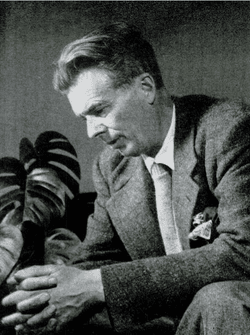
Aldous Huxley
Aldous Huxley was an English writer and one of the most prominent members of the famous Huxley Family. He spent the latter part of his life in United States, living in Los Angeles from 1937 until his death in 1963. He was the author of The Perennial Philosophy. ‘The further you go towards the East,’ Sri Ramakrishna was…
Read
Amaury De Reincourt
Amaury de Reincourt was born in Orleans, France. He received his BA from the Sorboune and his MA from the University of Algiers. He has authored several books. Of these the most remarkable publications are The Soul of India and The American Empire, The Eye of Shiva : Eastern Mysticism and Science. His reading of the Bhagavad-Gita as ‘the…
Read
Amiya Chakravarty
Amiya Chakravarty was one of the greatest critics of the Post Tagorean period, and a well known Poet. He was Rabindranath’s travel companion during his tours to Europe and America in 1930 and to Iran and Iraq in 1932. The Ramakrishna-Vivekananda tradition… was rooted in India’s perennial philosophy. Truth is One; men call it by different names :…
Read