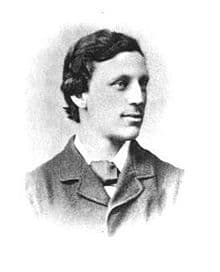
Arnold J. Toyenbee was an English economic historian also noted for his social commitment and desire to improve the living conditions of the working class. A collection of Toyenbee’s lectures was published posthumously in 1884 and soon became a classic of British economic history. He wrote in 12 vols., A Study of History, a most memorable work.
Sri Ramakrishna’s message was unique in being expressed in action. The message itself was the perennial message of Hinduism…. In the Hindu view, each of the higher religions is a true vision and a right way, and all of them alike are indispensable to mankind, because each gives a different glimpse of the same truth, and each leads by a different route to the same goal of human endeavours. Each, therefore, has a special spiritual value of its own which is not to be found in any of the others.
To know this is good, but it is not enough. Religion is not just a matter for study ; it is something that has to be experienced and to be lived, and this is the field in which Sri Ramakrishna manifested his uniqueness. He practised successively almost every form of Indian religion and philosophy, and he went on to practise Islam and Christianity as well. His religious activity and experience were, in fact, comprehensive to a degree that had perhaps never before been attained by any other religious genius, in India or elsewhere. His devotion to God in the personal form of the Great Mother did not prevent him from attaining the state of ‘contentless consciousness’— an absolute union with absolute spiritual Reality.
Sri Ramakrishna made his appearance and delivered his message at the time and the place at which he and his message were needed. This message could hardly have been delivered by anyone who had not been brought up in the Hindu religious tradition. Sri Ramakrishna was born in Bengal in 1836. He was born into a world that, in his lifetime, was, for the first time, being united on a literally world-wide scale. Today we are still living in this transitional chapter of the world’s history, but it is already becoming clear that a chapter which had a Western beginning will have to have an Indian ending if it is not to end in the selfdestruction of the human race. In the present age, the world has been united on the material plane by Western technology. But this Western skill has not only ‘annihilated distance’ ; it has armed the peoples of the world with weapons of devastating power at a time when they have been brought to point-blank range of each other without yet having learnt to know and love each other. At this supremely dangerous moment in human history, the only way of salvation for mankind is an Indian way. The Emperor Ashoka’s and the Mahatma Gandhi’s principle of non-violence and Sri Ramakrishna’s testimony to the harmony of religions ; here we have the attitude and the spirit that can make it possible for the human race to grow together into a single family—and, in the Atomic Age, this is the only alternative to destroying ourselves.
In the Atomic Age the whole human race has a utilitarian motive for following this Indian way. No utilitarian motive could be stronger or more respectable in itself. The survival of the human race is at stake. Yet even the strongest and most respectable utilitarian motive is only a secondary reason for taking Ramakrishna’s and Gandhi’s and Ashoka’s teaching to heart and acting on it. The primary reason is that this teaching is right—and is right because it flows from a true vision of spiritual reality.
Reflections from Readers
1 comment
Mahabir Gobin
What a wonderful history. Ramakrishna and Vivekanand.
Comments are closed.
More in Reminiscences
Aldous Huxley
Aldous Huxley was an English writer and one of the most prominent members of the famous Huxley Family. He spent the latter part of his life in United States, living in Los Angeles from 1937 until his death in 1963. He was the author of The Perennial Philosophy. ‘The further you go towards the East,’ Sri Ramakrishna was…
Read
Amaury De Reincourt
Amaury de Reincourt was born in Orleans, France. He received his BA from the Sorboune and his MA from the University of Algiers. He has authored several books. Of these the most remarkable publications are The Soul of India and The American Empire, The Eye of Shiva : Eastern Mysticism and Science. His reading of the Bhagavad-Gita as ‘the…
Read
Amiya Chakravarty
Amiya Chakravarty was one of the greatest critics of the Post Tagorean period, and a well known Poet. He was Rabindranath’s travel companion during his tours to Europe and America in 1930 and to Iran and Iraq in 1932. The Ramakrishna-Vivekananda tradition… was rooted in India’s perennial philosophy. Truth is One; men call it by different names :…
Read